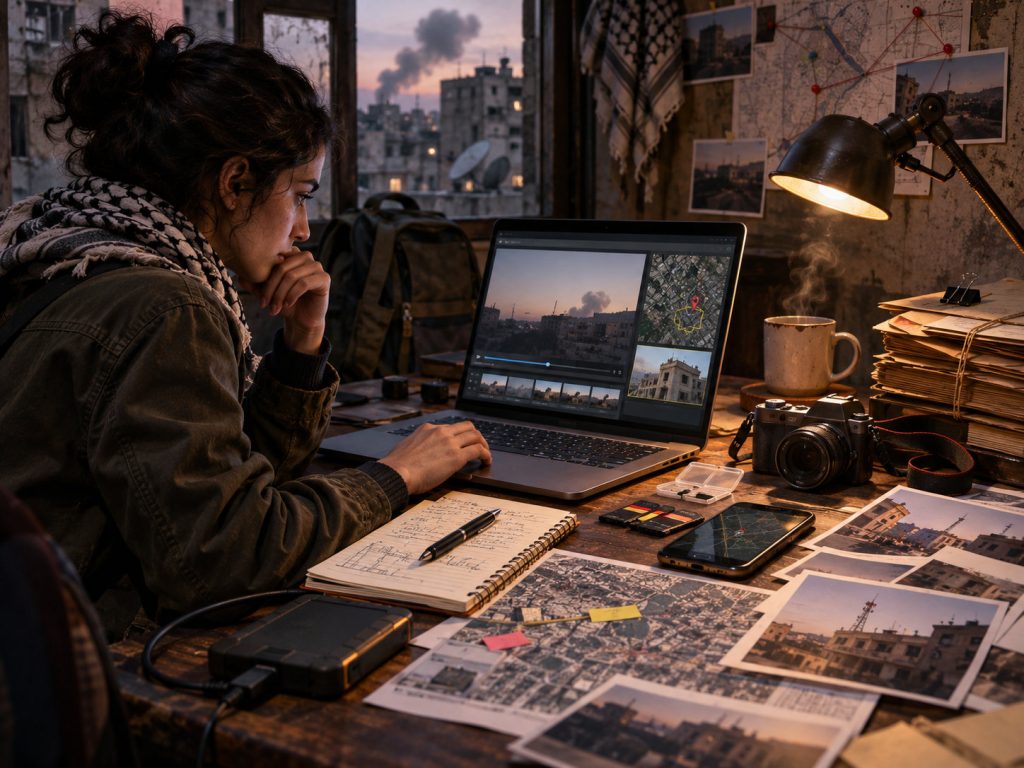
Independent archive editorial overview. Newly prepared historical context; this is not a recovered CyberDissidents.org article or a statement by the former organization.
Reporting from constrained conditions
In 2011, Syrians recording demonstrations and abuses became important sources for journalists covering events that were difficult to observe directly. Video clips, phone calls and messages could travel from a street to an international newsroom through several intermediaries. The Guardian reported on Rami Nakhle and other activists who helped make footage of protests visible from outside the country. Their work showed how the tools of digital publication could widen the circle of witnesses.
Why a clip requires context
A video may depict a real event while still leaving major questions unanswered. A researcher needs the date, location, source, sequence, editing history and corroborating accounts. Reposting a clip without these details risks wrong attribution or misinterpretation. The Committee to Protect Journalists later emphasized both the value of citizen-generated footage and the dangers and limitations faced by people gathering news during the Arab uprisings.
Risks to contributors
The people creating a digital record can face surveillance, threats, arrest or retaliation. Archival preservation therefore involves decisions beyond copyright: it includes whether an image reveals a person’s identity, whether names were already public at the time, and whether a supposedly historical description could mislead readers about present circumstances. A responsible archive cannot promise anonymity or safety merely because a webpage has been republished.
How to curate source material
Each item should have a transparent source link, a date of publication and a note about whether it is original footage, contemporary reporting or retrospective analysis. Missing video is best represented by metadata and a note, not an imitation video player. This prevents accidental claims that the archive possesses evidence it has not recovered.
Historical sources and further reading
Editorial note: illustrated photographs are modern AI-generated conceptual imagery, not historical documentation of the event or an image of an identified individual.