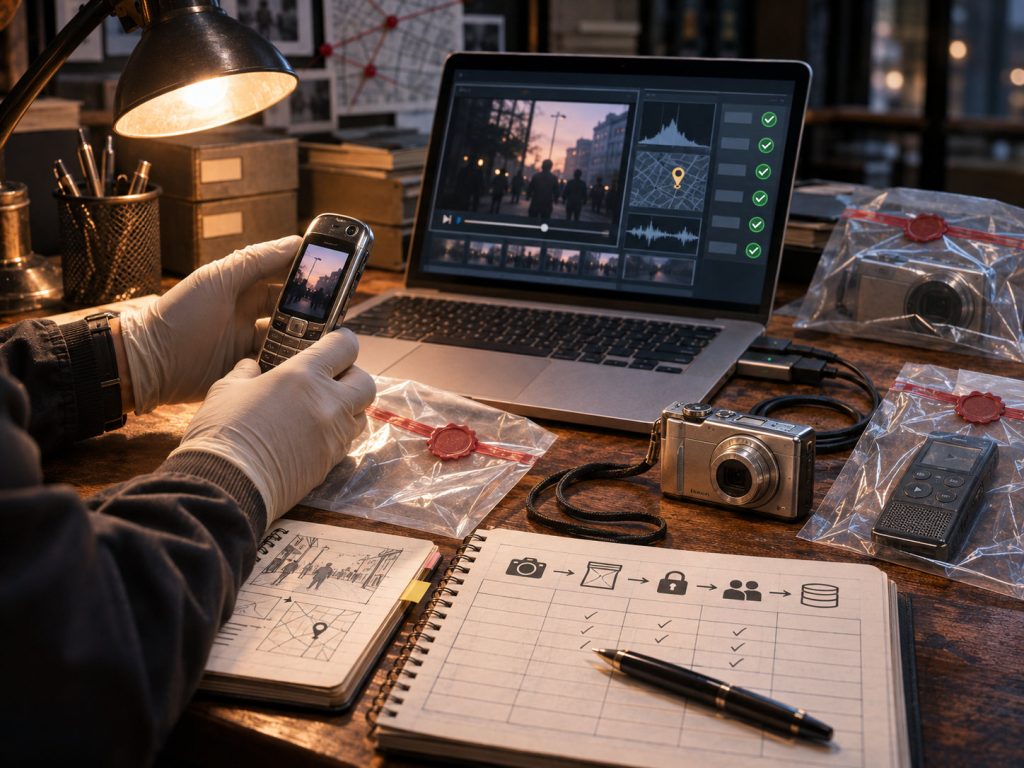
Independent archive editorial overview. Newly prepared historical context; this is not a recovered CyberDissidents.org article or a statement by the former organization.
A new type of public record
By 2011, people with relatively inexpensive cameras and mobile phones could record unfolding events and distribute footage through online networks. International outlets relied on some citizen-generated material to understand protests in places where reporters had limited access. This expanded the sources available to the public but also made editors and audiences responsible for judging provenance.
The questions behind the image
An image does not automatically reveal who recorded it, whether it has been edited or where an event occurred. Verification is an investigative process involving location cues, temporal context, comparison with other reporting and, where possible, confirmation from the original source. A filename or a repost on a popular account is rarely enough to settle those questions.
Preserving metadata without inventing media
A restored page can retain a historical video title and source link even if the clip is no longer available. It should display a clear “video not recovered” statement rather than a play button suggesting that the media can be watched. If a substitute illustration is used, label it as a new editorial image. A modern recreation should not be mistaken for a photograph from a specific 2011 street scene.
Ethical and practical safeguards
Avoid republishing footage that needlessly exposes a private person, especially in contexts associated with possible retaliation. Record original dates, source organization, permissions and any uncertainty. Good curation makes a historical collection useful while lowering the chance of false attribution, misplaced certainty or unauthorized reuse.
Historical sources and further reading
Editorial note: illustrated photographs are modern AI-generated conceptual imagery, not historical documentation of the event or an image of an identified individual.