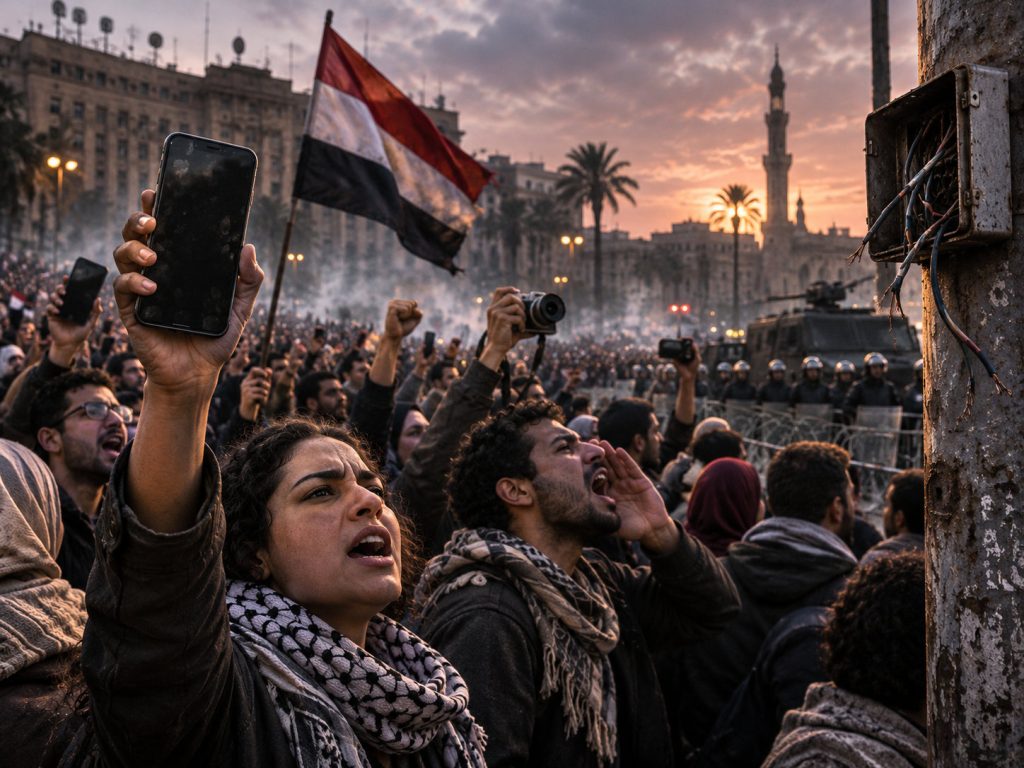
Independent archive editorial overview. Newly prepared historical context; this is not a recovered CyberDissidents.org article or a statement by the former organization.
What happened in January 2011
During the protests that began on 25 January 2011, Egyptian authorities interrupted access to communications networks. Human Rights Watch reported on 28 January that internet service providers, internet cafés and many mobile networks were not functioning. The action affected much more than social networking: it disrupted the ability to contact relatives, seek or share news, coordinate reporting and conduct daily activities. This article summarizes the episode from later and contemporary rights documentation.
Why a network blackout matters
Connectivity is infrastructure for expression, association, education and commerce. When network access vanishes, it becomes harder to verify official claims and harder for outside observers to hear local testimony. Yet the shutdown did not end collective action. Researchers have emphasized that the protests depended on existing social ties, labor organizing, street-level participation and many channels of information. An account that treats the blackout as only a Facebook or Twitter story would be incomplete.
The historical evidence
Human Rights Watch issued contemporaneous statements about the blackout and demonstrators. The Committee to Protect Journalists documented obstruction of press coverage, including intimidation of reporters and censorship. Freedom House later placed the communications shutdown within a broader history of online controls. Together these sources allow readers to reconstruct the period without pretending that one surviving website held a complete account.
Lessons for historians
An archival page about the blackout should be dated carefully: a report written on 28 January did not have the same knowledge as an assessment published a year later. The distinction matters when tracking the sequence of restrictions and responses. It also helps avoid retroactively attributing motives or outcomes to people who were working with fragmentary information at the time.
Historical sources and further reading
- Human Rights Watch, 28 January 2011
- CPJ, Attacks on the Press in 2011: Egypt
- Freedom House, historical assessment
Editorial note: illustrated photographs are modern AI-generated conceptual imagery, not historical documentation of the event or an image of an identified individual.